.png)
First Alaska Cruise Guide: How We Chose a Ship & What to Prepare For
Planning your first Alaska cruise can feel overwhelming, there are too many ships, too many itineraries, and a million add-ons that can quietly double the cost of your trip. We just completed our first Alaska cruise on the Norwegian Encore, and this guide breaks down everything we wish we had known before sailing.
Inside, you’ll learn how to pick the right starting city (Seattle vs Vancouver vs Anchorage-area ports), the best time of year to go based on weather and pricing, and how to avoid the most common first-timer mistakes, especially when it comes to shore excursions and onboard upsells. We’ll also include our real pricing and port experience to help you plan realistically.
If you want an Alaska cruise that’s actually worth your wallet, this guide will help you book smarter, prepare properly, and spend where it actually matters.

Our Cruise Cost Breakdown (What We Paid)
For our Alaska cruise, we paid $1,664.38 total for two (or $832.19 per person) including pre-paid gratuities.
Here’s the breakdown:
Guest Fare: $518.52 per person
Taxes/Fees/Port Expenses: $382.27 per person
Pre-paid Service Charges: $140 per person
This was the cruise fare itself, not including excursions, drinks, specialty dining, transport in ports, or extra onboard activities.
How We Booked (And Why We Wouldn’t Do It Again)
We booked through an NCL cruise consultant, and based on our experience, we don’t recommend doing that, especially for first-timers.
Here’s what happened:
We originally priced the cruise ourself on the NCL website.
After that, an NCL consultant called us and quoted a higher price than what we could book on our own.
The moment we mentioned the self-booking price, the quote dropped to match it.
This wasn’t even our first interaction with the same consultant, and the first time we spoke, she was rude and dismissive. we mentioned we had seen a better price through a third-party site, and she implied we could get banned from the cruise line for bringing it up, then continued scolding us before trying to sell the cruise. She said she couldn’t offer us anything additional (no Wi-Fi, no perks). The only extras mentioned were a celebration cake, bottle of wine, and current promo NCL was running for a $50 on board credit for one guest. That’s more than we would’ve gotten booking ourselves for the same price, so we booked through her. Unfortunately, we never received the cake or wine, and she provided no helpful guidance about how cruising works for first-timers.
Should you book through a cruise consultant?
In our case: no. There wasn’t a cost advantage, there weren’t meaningful perks, and the experience was worse than booking directly.
Recommendation: Book on your own unless:
the consultant is offering real onboard credit/perks in writing
or you’re using a well-reviewed travel agent with a clear benefit
The only potential advantage is that they can sometimes hold a price for about 24 hours, but that’s not enough to justify the rest.
How to Choose a Starting City (Seattle vs Vancouver vs Anchorage)
One of the biggest decisions for your first Alaska cruise is where you start, because your embarkation city affects price, port itinerary, and how “Alaska-heavy” the trip feels.
Most Alaska cruises depart from one of three regions:
Seattle (Most Popular + Easiest for U.S. Travelers)
Seattle is one of the most common departure cities, and it’s usually the easiest option for U.S. travelers. It’s also great if you want to add a pre-cruise day (or two) before sailing.
Typical itinerary style:
usually includes Victoria, BC (often required as an international stop)
ports like Juneau, Skagway, Ketchikan
may include Glacier Bay or Tracy Arm Fjord, depending on ship
Best for:
first-time cruisers who want easy flights + simple planning
travelers who want city time before the cruise
people who want the widest ship selection
Vancouver (More Scenic Sailing + Often More “Classic”)
Vancouver departures are known for a more scenic route through the Inside Passage, and many cruisers prefer it if the goal is maximum Alaska scenery from the ship.
Typical itinerary style:
Inside Passage-heavy
ports often overlap with Seattle itineraries (Juneau/Skagway/Ketchikan)
Victoria is less of a focus since you’re already departing Canada
Best for:
travelers who care more about scenic sailing days
people who want a more “Alaska-focused” route
cruisers who don’t mind an international flight/logistics

Anchorage / Seward / Whittier (Best for a True Alaska Itinerary)
If you want the most immersive Alaska experience, look at cruises that start or end near Anchorage, usually out of Seward or Whittier. These itineraries often feel more like an Alaska expedition than a sightseeing loop.
Typical itinerary style:
one-way itineraries (not always round-trip)
stronger focus on Alaska ports and landscapes
often combined with a land portion (“cruise tour”)
Best for:
travelers who want the most Alaska content and fewer “filler” stops
people open to one-way flights and more complex logistics
anyone pairing the cruise with Denali / Anchorage / Fairbanks
What Ports You’ll Usually See
Port lineups vary by ship and itinerary, but these are common:
Juneau (glacier access, whale watching, great DIY options)
Skagway (best excursion town, rail, hiking, history)
Ketchikan (short stops are common; check timing carefully)
Victoria, BC (common on Seattle sailings, easy walking port)
Glacier Bay (a huge “value” feature, choose itineraries that include it)
Best Time of Year for an Alaska Cruise (Prices vs Weather)
When you go matters almost as much as which ship you choose. Alaska cruise season is shorter than most destinations, and the differences between early, peak, and late season are very noticeable.
Here’s the simplest breakdown:
May (Cheaper + Colder, Less Crowded)
May is often one of the cheapest times to cruise Alaska and can be a great option if you’re trying to keep the trip affordable.
Pros:
lower prices
fewer crowds
longer daylight than you’d expect
Cons:
colder temperatures
some excursions may not be fully running yet
still a chance of rough weather
June–July (Peak Season: Most Expensive, Best “Classic” Experience)
This is the peak window, most families travel here because school is out, and Alaska is at its most active.
Pros:
best chance for comfortable weather
everything is open
long daylight for port days
Cons:
highest prices
biggest crowds
excursions sell out faster

August (Great Value Middle Ground)
August is still strong season, but depending on your ship and itinerary, you can sometimes find slightly better pricing than June/July.
Pros:
strong excursion availability
still good daylight
possible better deals than peak summer
Cons:
rain becomes more common in some regions
still busy in ports
September (Cheapest Deals + Worst Weather Risk)
September is one of the best months for pricing, but also where the weather can make or break the experience.
Pros:
some of the lowest prices of the season
fewer crowds
Great photography (foggy mountains, fall colors)
Cons:
higher chance of rain and rough seas
excursions may be limited late season
more itinerary disruption risk
What We Recommend
If you’re trying to balance cost, comfort, and experience:
Best overall: late June through early August
Best value: late May or August
Best cheap deals: September (but accept the weather gamble)
Shore Excursions: The Fastest Way to Overspend
Norwegian offers an enormous list of shore excursions, but in our experience they were wildly overpriced, even compared to similar tours booked outside the cruise line.

Here are a few examples we saw through NCL:
Jeep rental in Juneau (less than half day): $530
Whale watching: ~$250 per person
White Pass Railway: $229 per person
Helicopter tour: ~$500 per person
Chilkoot canoe wildlife safari: $329 per person
We had a $50 off first guest shore excursion credit (a promo when we booked), and even with that credit, it was still more expensive to book through the cruise line.
What we recommend instead:
For Alaska, you can save hundreds by choosing:
Viator tours
local operators in port
DIY days (rental car, walking routes, museums)
We booked our big Skagway tour outside the cruise line and paid far less than Norwegian’s comparable excursions. Our only disclosure would be, if you do not book your tour with the cruise and you miss final boarding, the cruises will not wait for you. Most companies through Viator were heavily aware of this and we were back with more than enough time to make boarding.
How to Choose a Cruise Line and Ship for Alaska
Choosing a ship for Alaska matters more than most people expect, not because you’ll spend the entire trip onboard, but because your ship determines your itinerary, port times, glacier access, crowd levels, and total cost once fees and add-ons stack up. Before booking, we focused on four factors that can truly make or break a first Alaska cruise.
1) Pick the itinerary first (not the ship)
For Alaska, itinerary should come before ship amenities. While it’s tempting to prioritize price, the itinerary ultimately determines how much you’ll actually experience once you arrive.
When comparing options, look closely for:
A strong port lineup (Juneau and Skagway are highlights for many first-timers)
Glacier Bay National Park (a major value feature when included)
Port times that allow for full days ashore rather than brief or late-evening stops
A lower fare can be appealing, but shorter port days can significantly limit what you’re able to do once you arrive. In Alaska, time in port is everything, if you don’t have enough of it, even a great destination can feel rushed. Paying slightly more for better port access often delivers far more value overall.

2) Decide what kind of onboard experience you want
Alaska ships vary widely in atmosphere. Some feel relaxed and scenic, while others lean toward a resort-style experience with constant activity.
We prioritized:
Plenty of indoor lounges and viewing areas (especially important on rainy or chilly days)
Included dining options that didn’t require frequent upgrades
A ship that felt enjoyable without needing to constantly spend extra onboard
For Alaska, comfort and scenery tend to matter more than high-energy attractions, especially on sea days spent cruising past glaciers.
3) Choose your cabin type with Alaska’s scenery in mind
In Alaska, cabin choice comes with unique trade-offs. While balconies aren’t always used the same way as in warm-weather destinations, they do offer meaningful advantages.
A balcony cabin provides:
A private outdoor viewing space during glacier cruising
Easier wildlife spotting without competing for deck space
The ability to enjoy views while staying warm and comfortable indoors
That said, inside cabins can still make sense for travelers who plan to spend most of their time on deck or ashore. We chose an inside cabin to keep costs down and allocate more of our budget toward port experiences, but for many travelers, the added comfort and flexibility of a balcony is well worth the upgrade in Alaska.

4) Compare the total cost: not just the cruise fare
Alaska cruise fares can look reasonable upfront, but total trip costs often rise quickly once you factor in:
Shore excursions
Drink packages
Specialty dining
Onboard activities
Wi-Fi
The biggest takeaway: Alaska cruises deliver the most value when you invest in ports, scenery, and glacier access, not when you spend heavily on constant onboard upgrades.
Cruise lines commonly offering Alaska itineraries
Most first-time Alaska cruisers choose from:
Norwegian Cruise Line (NCL) – Modern ships, lots of onboard entertainment, strong Seattle departures
Princess Cruises – Longstanding Alaska presence with a strong glacier access reputation
Holland America Line – A more traditional, scenic-focused Alaska experience
Celebrity Cruises – A more premium onboard atmosphere
Royal Caribbean – Large ships with a resort-style feel
What to Expect Onboard and Ports
We’re writing a full Norwegian Encore review later, but here’s what first-timers should realistically know:
Food overview:
If you’re expecting luxury dining, lower your expectations.
The Manhattan Dining Room is beautiful and feels formal, but portions were smaller than expected and quality varied.
Savor was inconsistent (steak was overcooked later in the week).
The buffet was honestly our best option, mainly because you can experiment, and if something isn’t good, you can grab something else.
We didn’t buy a drink package. We were fine with included beverages (water/tea/coffee/hot chocolate), and paid for one drink onboard, it cost about $18 plus a 20% gratuity, and it wasn’t even good.
Activities overview (quick warning)
This surprised us: a lot of onboard “activities” are really sales funnels.
Some examples:
“giveaways” that lead to aggressive spa sales
casino and bingo with high buy-ins and no budget-friendly options
arcade games costing several dollars per play
The best free onboard value (for us) was:
the shows (especially Choir of Man)
lounges for relaxing with views

What We Did in Each Port (Real Cost Examples)
We kept our port spending reasonable by mixing DIY days with one paid excursion.
Juneau (DIY day)
Turo rental: $186.55 total
Mendenhall Glacier entry: $5 per person
plus food/drinks downtown
Skagway (main excursion day)
Chilkoot Trail Hike + Float + Summit Drive: $476.82 for two
plus small extras downtown
Victoria (walking port)
Fisherman’s Wharf / floating homes / downtown / snacks Minimal spending, high enjoyment.
What to Pack for an Alaska Cruise (What Actually Matters)
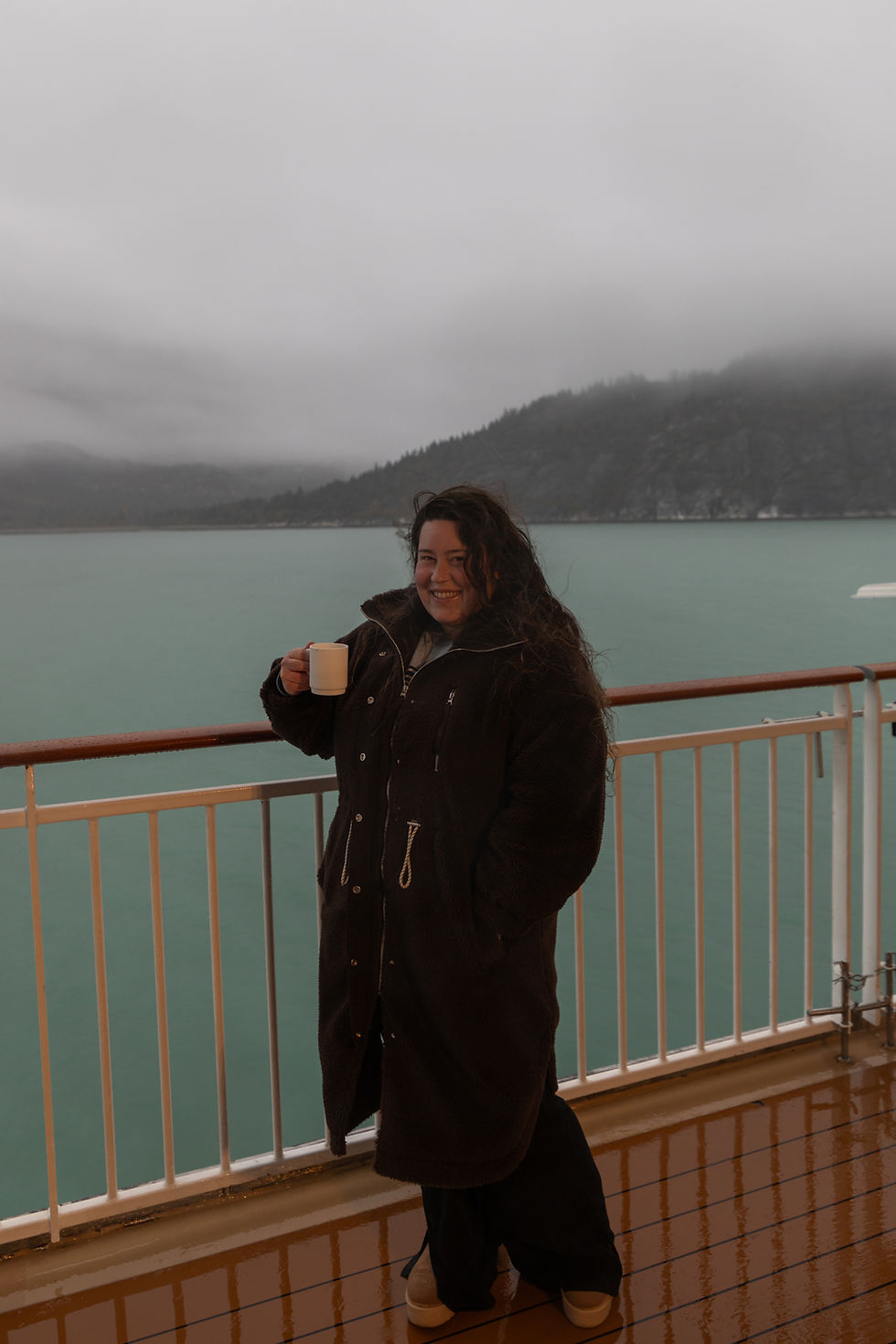
Packing for Alaska is different than most vacations. The biggest issue wasn’t cold, it was cold + wet + wind.
Non-negotiables
Waterproof rain jacket (real rain jacket, not a thin windbreaker)
waterproof shoes or hiking boots
warm layers (fleece, thermal)
gloves / beanie (yes, even in summer depending on weather)
What surprised us
We used our blow dryer constantly, not just for hair, but to dry wet coats, shoes, and clothes. Rain is definitely no joke so take precaution especially if traveling during one of the rainier seasons
Mistakes to Avoid on Your First Alaska Cruise
Here are the big ones we learned fast:
Don’t rely on cruise-line excursions for value. They’re convenient, but consistently overpriced.
Don’t plan a perfect port itinerary without checking arrival times. Juneau arriving mid-afternoon completely changes what you can do.
Don’t assume onboard activities will fill your time. If weather limits pools and outdoor decks, you may be left with expensive pay-to-play options.
Don’t under pack rain gear. Rain makes or breaks Alaska.
Don’t treat short ports like full day stops. Some ports require shuttle travel and the time disappears quickly.
Final Verdict: Is an Alaska Cruise Worth It?
Yes, if you plan it strategically.
Alaska cruises can be one of the best ways to experience multiple destinations in a single trip, and the base cruise fare can be surprisingly reasonable compared to planning Alaska entirely on land. But this is also a destination where it’s very easy to overspend: excursions booked through the cruise line are often heavily marked up, and a lot of onboard “activities” are designed to upsell you rather than entertain you.
The biggest factors that determine whether an Alaska cruise feels worth it are:
your starting city and itinerary
the time of year you travel
port times (not just ports)
and whether you book excursions independently
If you choose an itinerary that maximizes scenery (ideally including Glacier Bay), plan around realistic port timing, and pack correctly for cold, wet weather, an Alaska cruise can absolutely be worth your wallet, and one of the most memorable trips you’ll ever take.