.png)
Japan Trip Budget for First-Time Visitors: What Our Trip Actually Cost
From themed cafes with the cutest drinks, hotels with unbelievable skyline views, and one of the best shopping districts in the world, a trip to Japan can add up quick. It can become overwhelming to plan a budget for your trip, especially when you are trying to figure out just how much money you'll actually need. When planning our first trip to Japan we did a lot of research into pricing, but saw mixed information online. Some people claim Japan is an amazing budget travel destination, and others claim to have spent thousand of dollars on their trip.
This Japan trip budget breaks down what we actually spent during our April-May trip to Japan, including hotels, food, transportation, activities, souvenirs, and cash withdrawals to help you accurately budget for your trip. Our trip included time in Kyoto, Tokyo, and Tokyo Disney, so this budget is based on a mix of city sightseeing, temple visits, long-distance train travel, casual meals, convenience store snacks, and a few splurges.

One important note: this budget does not include flights. Airfare can vary dramatically depending on where you are flying from, what season you visit, whether you use points or miles, and how far in advance you book. Because of that, we're keeping flights separate and focusing this budget on the costs travelers can compare more easily once they are in Japan.
For our trip, we spent $2,811.39 in Japan, excluding flights. That came out to about $234 per day for two people, based on 12 calendar days, or about $117 per person per day. This was not an ultra-budget trip, but it also was not luxury. We stayed in comfortable hotels, used trains often, took the Shinkansen between Tokyo and Kyoto, ate mostly casual meals, visited several temples and attractions, and spent two days at Tokyo Disney. In this post, we’ll break down what our Japan trip actually cost, what felt cheaper than expected, what felt more expensive than expected, and where we would save money next time.
Disclaimer: This post does contain affiliate links which if used, we can earn commission from. This helps continue to make honest reviews for our readers.
Japan Trip Budget: What First-Time Visitors Should Know
Before you start planning your Japan trip budget, it helps to be honest about your travel style. Japan can be done on a tighter budget, but the choices you make around hotels, transportation, and convenience will have a big impact on your trip.
Know Your Travel Style Before You Book
One of the biggest things that will affect your Japan trip budget is how much convenience you want to pay for. Some travelers may feel more comfortable booking a familiar Western hotel brand, especially if they are worried about language barriers or customer service issues. We personally stayed in a Japanese hotel brand in Kyoto and had no issues. The room was smaller than many Western hotel rooms, but the bed, bathroom, cleanliness, and front desk experience all felt very standard and easy to navigate. There may be a small language barrier in some situations, but we found that important staff members, especially those helping with check-in, check-out, and payments, were able to help us without any issues.

Another thing to consider is how comfortable you are with public transportation. Japan’s train and subway systems are one of the biggest ways to save money, but if you know you do not want to rely heavily on transit, you may want to budget more for either taxis and ride share, or a hotel in a more central location. A better located hotel may cost more per night, but it can make your trip easier if you want to walk more and take transit less. For us, location near public transportation is always a major factor when choosing a hotel. We would rather pay a little more for a hotel that is clean, well reviewed, and close to useful train or subway lines than save money on a hotel that makes every day more complicated.
The last thing to consider is what kind of dining experience you want to have. As many online blogs, forums, and social media channels suggest, Japanese convenience stores are god-sent. They have hot food, cold food, desserts, drinks, etc. that are well prepared, clean, and cheap. You can use your IC Card in most convenience stores making transactions easy, and they are normally located close to attractions and hotels. However, if you are looking for nicer dining experiences, be sure to include that in your budget.
Our Travel Style for This Japan Budget
Our travel style for this Japan trip was budget friendly, but not bare bones. We were willing to spend more when it made the trip cleaner, easier, or more efficient.
For hotels, that meant choosing places that were well reviewed, close to transit, and easier for us to navigate as first-time visitors. We could have saved money by booking smaller rooms, staying farther from train stations, or choosing worse reviewed hotels, but convenience and comfort mattered to us. Since we knew we would be out exploring most of the day, we did not need anything luxurious, but we did want a clean and comfortable place to come back to.

Transportation was another area where our travel style shaped the budget. We used public transportation as much as possible, and that helped keep our overall Japan trip cost lower. Japan’s public transit was safe, efficient, and much easier to use than we expected once we got the hang of it. We used Suica cards often and only took one taxi during the main Kyoto/Tokyo portion of our trip, which was from our Kyoto hotel to Kyoto Station when we had luggage and were traveling during a busy time.
We did splurge in a few places. One example was the Shinkansen from Tokyo to Kyoto. Since we were traveling in spring, standard seats were sold out, and we wanted a chance to see Mount Fuji, so we paid extra for Green Car seats on the Fuji side of the train. This is not necessary for every traveler, and depending on your train time, there may be regular reserved seats available. The best way to guarantee you get the seats you want is to purchase them in advance! This can also save you money, so you don't end up buying the green car seats like we did!
Overall, this was not an ultra-budget Japan trip, but it also was not a luxury trip. We spent more when it made the trip smoother, saved money by using trains instead of taxis, and tried to balance comfort with cost.
P.S: Eat at the convenience stores, they are cheap and easy! They also provides a nice break from the mental weight of navigating language barriers at the end of a long day!
Is Japan Expensive to Visit?
Japan can be expensive to visit, but not always in the ways you might expect. Before our trip, we kept hearing that Japan was surprisingly affordable, and in many day-to-day ways, that was true. Food, local transportation, convenience stores, vending machines, and casual meals were all much cheaper than what we are used to in the U.S.
At the same time, some parts of our Japan trip budget added up quickly. Long-distance transportation, hotel choices, shopping, and multiple paid attractions in one day were areas we had to be more mindful. Overall, Japan felt like a destination where you can save a lot of money if you are flexible, but convenience, timing, and vacation shopping add up quickly.
What Felt Cheaper Than Expected
Food Was Cheaper Than Expected
Food was one of the biggest areas where Japan was cheaper than expected. We usually ate two to three meals a day, with coffee stops, convenience store runs, and snacks in between. Even with all of that, we were really surprised when we totaled our food spending after the trip.

We had one or two fancier sit down meals during our trip, but most of our food came from convenience stores, quick service spots, food stalls, and fast food restaurants. But even after adding in coffee breaks, snacks, and a few sit-down meals, our total was much lower than what we are used to spending.
We also did our own food and beverage crawl inside Tokyo DisneySea. If we had bought a similar amount food in the U.S. parks, it would have cost significantly more. In Japan, even theme park snacks and drinks were more reasonably priced than expected.
Hotels Were Reasonable, Even When We Paid More Than Needed
Hotels are also fairly affordable in Japan, especially if you are willing to stay in Japanese-branded hotels, book smaller rooms, or walk a little farther to public transportation. We paid more than we probably needed to because this trip was planned fairly last minute, and we also spent part of the trip near Tokyo Disney, where we wanted a hotel with a shuttle. Even with that, our total hotel cost for 11 nights was $1,205.62, or about $109.60 per night. Considering that included taxes, fees, Kyoto, Tokyo, and a Tokyo Disney-area hotel, we feel like this was a pretty good average nightly rate.
We are not including this in the main budget total, but on a more recent trip to Osaka, we found a hotel for around $150 total for 5 days and 4 nights through a last-minute booking deal. That is not something I would count on for every trip, but it does show how affordable hotels in Japan can be depending on the city, timing, and availability.
What Felt More Expensive Than Expected
Because we had heard so much about Japan being affordable, a few costs surprised us on our first trip.
The Shinkansen Was a Bigger Cost Than We Expected
The first thing in Japan that was more expensive than we anticipated was the Shinkansen. We took the Shinkansen between Tokyo and Kyoto, and one way it cost around $266. We bought our tickets same day, and because of that the only seats together were in the Green Car. We could have saved money if we sat apart in the normal car. The ride was smooth, comfortable, and much easier than dealing with an airport, but the converted cost still surprised us.

For comparison, we had seen flights to Kyoto or Osaka from Tokyo for around $44 per person. Even though flying is cheaper, the Shinkansen was still worth it to us because it was easy, efficient, comfortable, and took us city center to city center. Plus, the Shinkansen is a Japan experience we didn't want to miss! But if you are planning a Japan trip on a budget, long-distance train costs are something you should not underestimate.
For a family of four, Shinkansen tickets can easily become one of the biggest transportation expenses of the trip, especially if you choose reserved seats or Green Car seats. Depending on the route, seat type, and exchange rate, this could beseveral hundred dollars for one long-distance travel day.

Cash-Based Activities Added Up More Than Expected
One cost that added up more than expected in Japan was cash-based activities. This was especially true in Kyoto, where a lot of the things we wanted to do were smaller cultural sites, temples, gardens, castles, and outdoor attractions. Individually, these costs did not seem that high. Many temple and shrine fees were around ¥600 to ¥1,200 per person, Nijō Castle was ¥1,300 per person, and the monkey park was another paid activity we did in cash. None of these felt overpriced on their own, but because we were doing several activities like this across the trip, they added up quickly.
By the end of the trip, we had spent around $200 in cash on these types of activities. That was more than we expected, mostly because we had not fully accounted for how many smaller admission fees we would pay along the way. I would not skip these experiences, but I would recommend bringing more cash than you think you need, especially if your itinerary includes a lot of temples, shrines, castles, gardens, animal parks, or smaller attractions.
Shopping Can Add Up Quickly
Shopping was another area where we had to be careful. Individual items may not seem too expensive in Yen, but the totals can add up quickly if you are not paying close attention to the conversion. We bought a couple of high quality shirts that ended up being around $50 USD each. They were worth it, and we only bought two, but we did not fully realize the converted cost at the time. This is where it is easy to go vacation blind! When you are excited, walking through shops, and thinking in Yen instead of dollars, purchases can feel smaller than they actually are.
If shopping is one of your goals in Japan, I would build it into your budget from the beginning. Japan has so many tempting souvenirs, clothes, snacks, character goods, beauty products, stationery, and specialty items that it's easy to overspend without meaning to. None of that is a bad thing if it is part of your plan, but it is something I would be mindful of before assuming Japan will feel cheap across the board.
None of these costs felt unreasonable, and we were happy to pay for the experiences and items we wanted. But if you are traveling on a tight budget, it is worth planning ahead for Shinkansen tickets, theme/amusement park days temple-heavy sightseeing days, and shopping instead of only focusing on food and hotels.
Our Japan Trip Budget at a Glance
For our April-May 2025 trip to Japan, we spent $2,811.39 in Japan, excluding flights.
This total is for two people and is based on 12 calendar days / 11 nights in Japan. Our trip included Kyoto, Tokyo, and Tokyo Disney, so this budget includes a mix of temple sightseeing, city exploring, long-distance train travel, casual food, convenience stores, and a few splurges.
One important note: this total does not include flights. Airfare can vary dramatically depending on where you are flying from, what season you visit, whether you use points or miles, and how far in advance you book. Because of that, we are keeping flights separate and focusing this Japan trip budget on the costs travelers can compare more easily once they are in Japan.
Total Trip Cost
Our total Japan trip cost, excluding flights, was $2,811.39.
Here is how that broke down:
Hotels: $1,205.62
Food: $323.70
Transportation: $623.15
Activities and souvenirs: $448.68
Cash withdrawals: $209.78
Cost Per Person
For two people, our Japan trip cost came out to $2,811.39 total, excluding flights.
That means we spent about $1,405.70 per person. This does not include airfare, so if you are planning your own Japan trip budget, you will want to add your expected flight cost separately.
Cost Per Day
Based on 12 calendar days, our average cost was about $234.28 per day for two people.
That comes out to about $117.14 per person, per day. This was not an ultra budget Japan trip, but it also was not luxury. We stayed in clean, comfortable hotels, used public transportation often, took the Shinkansen between Tokyo and Kyoto, visited several temples and attractions, spent two days at Tokyo Disney, and bought some souvenirs.
How Much Does a Hotel Cost in Japan?
Hotels were the largest category in our Japan trip budget. For 11 nights, we spent $1,205.62 total on hotels. That came out to about $109.60 per night for two people. Considering this included Kyoto, Tokyo, and a Tokyo Disney-area hotel, we felt like this was a reasonable average nightly cost. We were not staying in luxury hotels, but we also were not choosing the absolute cheapest rooms available. Our priority was finding hotels that were clean, well reviewed, close enough to transit, and easy to navigate as first-time visitors.
What We Paid for Hotels in Kyoto
In Kyoto, we stayed at Hotel Traveltine Kyoto Kiyamachi. This hotel worked well for us because it was close to transit, had a convenience store nearby, and made it easy to get around Kyoto without relying heavily on taxis. The room was smaller than many Western hotel rooms, but that was expected. It was clean, comfortable, and easy to use as a home base while we explored Kyoto. We also liked that there were basic amenities available; laundry on-site, coffee and tea available, and a 7-Eleven nearby with a large variety and an ATM. For us, the location was the biggest benefit. We were able to walk to a lot of areas and use buses or trains when needed, which helped keep transportation costs lower.

What We Paid for Hotels in Tokyo
For the Tokyo Disney portion of our trip, we stayed at Comfort Suites Tokyo Bay. We chose this hotel because it was close to Tokyo Disney and had a free shuttle to the parks. This was one of those times when convenience mattered to us. We could have stayed farther away and saved money, but having a hotel shuttle made our Disney days easier. The shuttle was reliable, clearly marked, and ran on time, which made it worth it for us. The hotel also had helpful staff, self check-in and checkout machines, laundry, free toiletries, and easy transportation to the parks.

A Quick Note on Osaka Hotel Costs
Osaka was not included in this specific
Japan trip budget, so we are not adding it to the total above. But since Osaka is a very common stop for first-time visitors, we do think it is worth mentioning. On a more recent trip to Japan, we found a hotel in Osaka for around $150 total for 5 days and 4 nights through a last-minute deal. We would not plan a budget around finding that exact kind of deal every time, but it does show that Osaka can be a very affordable city depending on dates, location, and availability. If you are planning a Japan itinerary that includes Kyoto and Osaka, it is worth comparing hotel prices in both cities. Sometimes staying in Osaka can be cheaper, and depending on your plans, it may still be convenient for day trips
What Affects Hotel Prices in Japan
Hotel prices in Japan can vary a lot depending on the city, neighborhood, room size, booking timing, and how close you want to be to major attractions or train stations. For our trip, the biggest factors that affected our hotel cost were booking fairly last minute, staying in Kyoto during a popular travel season, and wanting a Tokyo Disney-area hotel with a shuttle. We also prioritized hotels that were clean, well reviewed, and convenient. We could have saved money by choosing smaller rooms, staying farther from transit, or booking earlier, but location and comfort mattered to us. If you want to save money on hotels in Japan, book earlier than we did and compare neighborhoods carefully. You may find cheaper rooms by staying farther from major attractions, but make sure you are not creating extra transportation costs or making every day harder. For us, a hotel near public transportation was worth paying a little more for.
How Much Does Food Cost in Japan?
Food was one of the biggest surprises in our Japan trip budget. We spent $323.70 total on food for two people. Based on 12 calendar days, that came out to about $26.98 per day for two people, or about $13.49 per person, per day. This was much cheaper than what we are used to spending on food while traveling. We did not eat fancy meals every day, but we also were not skipping meals. We ate two to three times a day, bought snacks, stopped for coffee, grabbed convenience store meals, tried quick service spots, and had a few sit down meals.
Convenience Store and Quick Meal Costs
Convenience stores were one of the easiest ways we saved money in Japan. Stores like 7-Eleven, Lawson, and FamilyMart made it easy to grab breakfast, snacks, drinks, quick meals, and late night food without spending much. We used convenience stores a lot, especially on busy sightseeing days when we did not want to sit down for a full meal. They were also helpful on early mornings, train rides, and long walking days in Kyoto. For budget travelers, convenience stores are one of the easiest ways to keep food costs low in Japan without feeling like you are missing out. The food quality was better than what we are used to from convenience stores at home, and it made our days much easier.
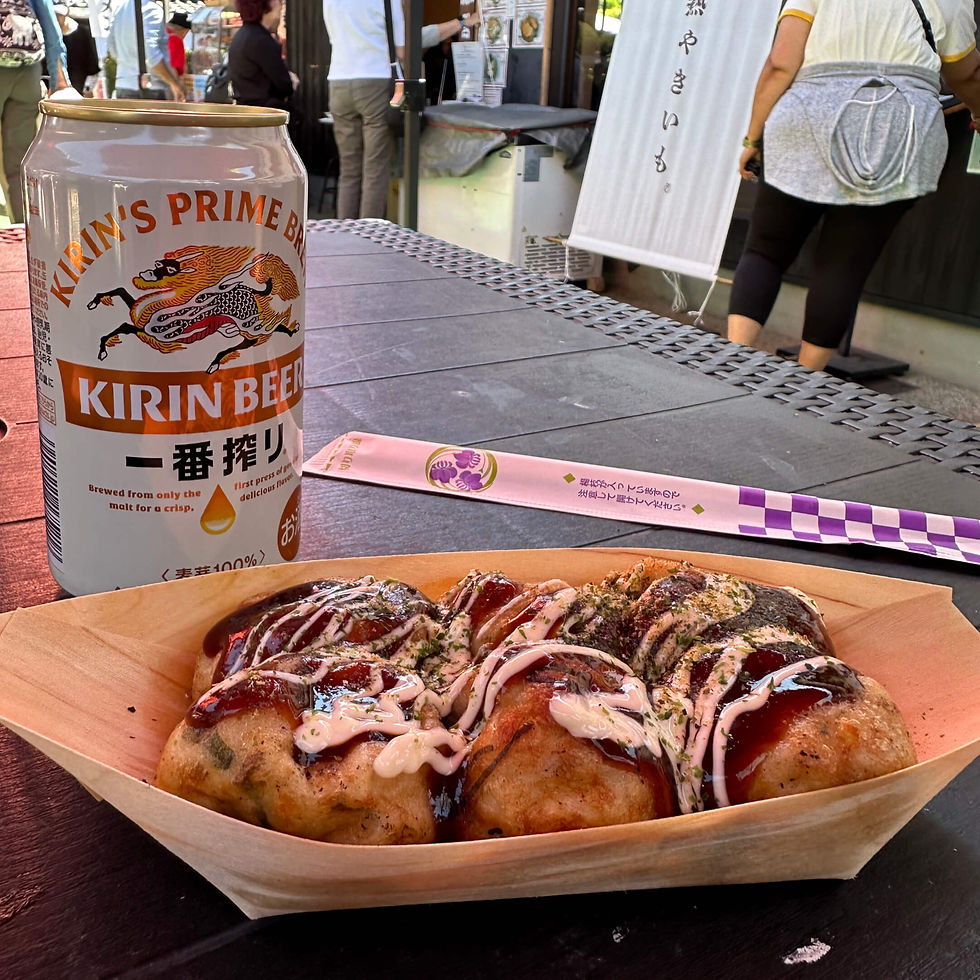
Casual Restaurant Prices
Casual restaurants and quick service spots also felt reasonable. We were able to eat without feeling like every meal needed to be a big budget decision. We mixed convenience store meals with casual restaurants, fast food, food stalls, coffee stops, and a few sit down meals.
That balance helped keep our total food cost low while still letting us enjoy the food in Japan. If you are trying to travel to Japan on a budget, you do not need to eat only convenience store food. A mix of casual restaurants, quick meals, and convenience store snacks can go a long way.
Restaurant Prices in Tokyo
Tokyo can be expensive, but restaurant prices did not feel as overwhelming as we expected. What helped us was not eating at high end restaurants or tourist heavy sit down spots for every meal. Even during our Tokyo Disney days, food felt more reasonable than expected. We did our own food and beverage crawl inside Tokyo DisneySea, trying different snacks and drinks throughout the day. If we had bought a similar amount of food at the U.S Disney parks, it would have cost much more. That said, Tokyo can still get expensive quickly if you are doing themed cafés, nicer restaurants, character dining, cocktail bars, or food-focused experiences. If food is a big part of your trip, we recommend you budget extra for it.
How Much Does Ramen Cost in Japan?
Ramen is one of the best value meals you can get in Japan. Prices vary depending on the restaurant, location, and type of ramen, but it is a filling meal that will cost you much less than many sit down places in the U.S. The average price for ramen in Kyoto ranges from about 900 Yen to 1200 Yen or about $6 to $8 USD. Ramen is the perfect example of affordable meals in Japan, you can get something fresh, filling, and memorable without breaking the bank. If you are trying to keep your Japan trip budget low, meals like ramen, curry, udon, soba, rice bowls, and convenience store food can help balance out more expensive days.
Transportation Costs in Japan: Trains, Suica, Shinkansen, and Uber
Transportation was our second-largest category after hotels. We spent $623.15 total on transportation during our Japan trip. This included local trains, subway rides, Shinkansen tickets, and the small number of taxi and ride shares we took. Japan’s transportation system was one of the best parts of the trip, but it is also a category where costs can vary a lot depending on how you travel. Local transportation was affordable. Long-distance transportation was not.
Local Train and Subway Costs
Local trains and subways in Japan were much cheaper than we expected and very easy to use once we got comfortable with the system. We used Suica in Apple Wallet often, which made local transit much simpler. Instead of buying paper tickets for every ride, we could tap in and tap out. The fare was deducted automatically, and we did not have to select a destination at the gate. This was especially helpful on busy travel days or when we were trying to move quickly through stations. In Kyoto and Tokyo, local rides were usually very reasonable and less than a few hundred Yen.
Shinkansen Cost
The Shinkansen was one of the more expensive parts of our transportation budget. We took the Shinkansen between Tokyo and Kyoto, and one direction cost around ¥39,000 total, or about $266 USD for two people. The train was mostly booked up, so to sit together on the Fuji view side (E and D) of the train we needed to book Green Car seats, which on average are about $10-$50 more than ordinary car seats. The ride itself was excellent. It was smooth, comfortable, quiet, and much easier than going through the airport. We also liked that it took us city center to city center, which saved time and stress. That said, the price still surprised us. Before the trip, we had heard so much about Japan being affordable that we were not expecting the Shinkansen to feel like such a big budget item.
Tokyo to Kyoto Train Cost
For our Tokyo to Kyoto route, we booked Green Car seats because we wanted to sit together, and have the best chance of seeing Mount Fuji side from the train. This was a splurge and not something every traveler needs to do. If you are trying to keep your Japan trip budget lower, standard reserved seats or non-Green Car seats may be a better option. The important thing is to compare your options before booking and understand that long-distance train travel can become one of the most expensive parts of your trip. For two people, the Shinkansen felt manageable. For a family of four, it could become a much larger budget item very quickly. We still think the Shinkansen was worth taking. It was comfortable, efficient, and much easier than dealing with airport logistics. But it is definitely something we would recommend budgeting for ahead of time.
Uber and Taxi Costs in Japan
We tried to limit taxis and Uber as much as possible because public transportation was so efficient. During the main Kyoto and Tokyo portion of our trip, we only took one taxi from our Kyoto hotel to Kyoto Station because we had luggage and were traveling during a busy time. The biggest taxi price shock came near the end of the trip when we looked at getting from the Urayasu area to Haneda Airport. A cab or Uber estimate from the Tokyo Disney-area hotel to Haneda was around ¥12,000 to ¥13,000, which was roughly $85 to $90 USD at the time. The train and shuttle route was much cheaper and only added a small amount of travel time. Even though we usually like taxis when we have luggage, the price difference was too big to ignore. If you are trying to keep your Japan trip budget lower, limit taxis and ride share when possible. They can be helpful in certain situations, especially with luggage, late nights, or complicated routes, but they add up much faster than trains.
Japan Rail Pass Cost: Should You Budget for It?
We would not automatically buy a Japan Rail Pass for every trip. It really depends on your itinerary. For our trip, we traveled between Tokyo and Kyoto, but we were not taking enough long-distance train rides to make the pass an obvious choice. Since our itinerary was mostly Kyoto, Tokyo, and Tokyo Disney, individual train tickets made more sense for us. The Japan Rail Pass can be helpful for certain trips, but it is not something we recommend adding to your budget without doing the math first.
Why We Would Not Automatically Buy a Japan Rail Pass
The Japan Rail Pass is not automatically worth it just because you are visiting Japan.
If your trip is mostly focused on one or two cities, or if you are only taking one major Shinkansen route, individual tickets may be a better option. That was the case for us.
We only needed long-distance train travel for the Tokyo/Kyoto portion of the trip. The rest of our transportation was mostly local trains, subways, buses, and a few taxis. For that kind of itinerary, we recommend pricing out individual tickets before assuming the Japan Rail Pass will save money.

When the Japan Rail Pass Might Be Worth It
The Japan Rail Pass may be worth considering if you are taking multiple long-distance train rides in a short period of time. For example, it may make more sense if your itinerary includes several cities, like Tokyo, Kyoto, Osaka, Hiroshima, or other destinations that require expensive train routes. It may also be worth looking into if you like having one pass instead of buying individual long-distance tickets, but we still recommend comparing the total cost first.
When Individual Shinkansen Tickets May Be Better
Individual Shinkansen tickets may be better if your itinerary is simple. If you are only traveling between Tokyo and Kyoto, or Tokyo and Osaka, buying individual tickets may be easier and more cost-effective than buying a rail pass. This also gives you flexibility to choose the exact train time, seat type, and route that works best for your trip. For us, buying individual tickets worked well, even though we had a learning curve with the ticket machines and understanding the base fare versus limited express ticket.
Do You Need Cash in Japan?
Yes, we would recommend bringing cash to Japan. Japan is much more card friendly than some travelers expect, but cash is still important for temples, small shops, food stalls, souvenirs, and certain areas where ATMs are not immediately nearby. We withdrew $209.78 in cash during our trip. That does not mean every traveler needs the same amount, but we were glad to have Yen on hand, especially in Kyoto.
How Much Cash Should You Bring to Japan?
How much cash you should bring to Japan depends on your itinerary. If you are spending most of your time in major cities, using trains, eating at casual restaurants, and shopping at larger stores, you may not need a large amount of cash. However, if you are visiting temples, shrines, food stalls, smaller shops, markets, or more traditional areas, we recommend you carry cash each day. In Kyoto, especially on temple-heavy walking days, cash was important. Many temple entry fees are cash-based, and small purchases along the way were often easier with Yen. For a full day of temples, snacks, and small purchases, you should carry enough cash so you are not depending on finding an ATM in the middle of your route.

Using a Credit Card in Japan
We were able to use credit cards in many places in Japan, especially hotels, larger stores, convenience stores, some restaurants, and Tokyo Disney. We also used Suica often for transit and small purchases, which made things easier. Vending machines, coin lockers, convenience stores, and some quick purchases accepted Suica, so we did not always need to pull out cash or a credit card. That said, we don't recommend you to rely only on credit cards. Japan is card friendly in many places, but not everywhere. Having cash gives you more flexibility and prevents small payment issues from interrupting your day.
7-Eleven ATMs in Japan
7-Eleven was one of the most useful convenience stores for us because it had a good variety of food, drinks, and ATMs. In Kyoto, our hotel had a smaller convenience store nearby, but we preferred the 7-Eleven about a block away because it had more options and an ATM.
If you are planning to withdraw cash in Japan, 7-Eleven ATMs are a good option to know about. We would still recommend withdrawing before you start a long sightseeing day, especially if you are heading into areas with lots of temples, small shops, and fewer obvious ATM stops.
How Much Money Should You Budget for a Japan Trip?
How much money you should budget for a Japan trip depends on your travel style, but our trip is a good example of a comfortable, mid-range budget. We spent about $117.14 per person, per day, excluding flights. That included hotels, food, transportation, activities, souvenirs, and cash withdrawals. It also included a few more expensive choices, like Tokyo Disney and Green Car Shinkansen seats. If you are planning your own Japan trip budget, we recommend you start with airfare, then estimate hotels, long-distance transportation, food, attractions, and shopping separately.
Budget Traveler Estimate
A budget traveler can spend less than we did by making a few different choices. You could save money by staying in cheaper hotels or hostels, booking earlier, skipping Tokyo Disney, avoiding Green Car seats, eating mostly convenience store meals and casual food, and limiting shopping. You could also keep costs lower by focusing on one region instead of moving between Tokyo and Kyoto. For a budget traveler, the biggest savings would probably come from hotels, long-distance transportation, and paid activities.
Mid-Range Traveler Estimate
Our trip fits best in the mid range category. We were budget conscious, but not bare-bones. We stayed in clean and comfortable hotels, paid for convenience when it mattered, used public transportation heavily, ate mostly casual food, visited paid attractions, spent two days at Tokyo Disney, and splurged on Green Car Shinkansen seats. For a similar trip, we would expect a mid range traveler to budget around what we spent, then adjust based on airfare, hotel timing, shopping, and how many paid experiences they want to include.
Higher-Budget Traveler Estimate
A higher budget Japan trip could cost much more than ours. If you stay in luxury hotels, take more taxis, book private tours, eat at high end restaurants, shop heavily, use luggage delivery often, or add more premium experiences, your total can rise quickly. Japan gives you a lot of control over your spending. You can eat very affordably and use trains almost everywhere, but you can also spend a lot on hotels, experiences, shopping, dining, and convenience.
How to Travel to Japan on a Budget: What We Would Do Differently Next Time
Looking back, there are definitely a few things we would do differently to save money on a future Japan trip. We do not regret our spending, but we can see where better planning would have helped. Most of our savings would come from booking earlier, being more intentional with long-distance transportation, and budgeting ahead for shopping and experiences.
Book Hotels Earlier
The biggest thing we would do differently is book hotels earlier. This trip was planned fairly last minute, which limited our hotel options and likely increased what we paid. We still found good hotels, but we probably could have found better rates or more options if we had booked earlier. If you are planning a Japan trip during cherry blossom season, fall foliage, school breaks, or any popular travel period, we recommend you start comparing hotels as soon as your dates are realistic.
Choose Hotel Locations Carefully
We would still prioritize hotel location, even when trying to save money. A cheaper hotel is not always a better deal if it makes every day harder. If you have to spend more time transferring trains, walking farther with luggage, or taking taxis because your hotel is inconvenient, the savings may not be worth it. For us, being close to public transportation was one of the best ways to save money. It helped us use trains and buses instead of relying on taxis or ride share. Next time, we would still choose hotels near useful train or subway lines, but would book earlier to get better prices.
Use Convenience Stores and Casual Restaurants Strategically
Convenience stores and casual restaurants helped keep our food costs low without making the trip feel too restrictive. Next time, we would use the same strategy. We would not plan every meal around convenience stores, but we would use them for breakfasts, snacks, drinks, quick lunches, and busy travel days. This is one of the easiest ways to travel to Japan on a budget while still enjoying good food.
Be Careful With Long-Distance Train Costs
Long-distance train costs can add up quickly in Japan. The Shinkansen was worth it for us, but it was also one of the most expensive transportation choices we made. Next time, we would compare routes, seat types, and timing more carefully before booking. We would also do the math on individual Shinkansen tickets
versus a rail pass if we were planning to visit
more cities.
Limit Taxis and Uber
We would still limit taxis and Uber on a future trip. Public transportation in Japan was safe, efficient, and much cheaper than ride share. In most cases, trains and buses were the better option. That said, we would not completely rule out taxis. They can be worth it with luggage, during bad weather, late at night, or when the public transit route is too complicated. We just would not make them a daily habit if we were trying to keep costs down.
Budget for Shopping Before You Go
Shopping is one area we would budget for more intentionally next time.
Japan has so many tempting things to buy: clothing, snacks, character goods, beauty products, stationery, kitchen items, souvenirs, and specialty items. It is very easy to get vacation blinded, especially when you are thinking in Yen and not constantly converting the total back to dollars. We bought a couple of high-quality shirts that ended up being around $50 USD each. They were worth it, and we only bought two, but we did not fully realize the converted cost at the time. Next time, we would set a shopping budget before the trip. That way, buying things feels fun and planned instead of surprising when we add up the totals later.
What We Would Still Splurge On
Next time, we would probably splurge more on experiences and activities instead of convenience upgrades. Japan has so many unique experiences that feel worth budgeting for, like river cruises, cultural activities, food tours, ryokan stays, or even staying at a temple. Those are the kinds of things we think we would remember more than an extra taxi ride or a slightly bigger hotel room. We would still spend money on clean, well located hotels and efficient transportation, but we would be more intentional about saving in some areas so we could spend more on experiences.
Yes, this is one of those affiliate links we mentioned earlier. But genuinely, if you are going to splurge anywhere in Japan, we think experiences are one of the best places to do it. A guided food tour, cultural experience, or day trip is usually something you will remember long after you forget the price.
Was Our Japan Trip Worth the Cost?
Absolutely. Even with the parts that cost more than we expected, our Japan trip was completely worth it.
Kyoto alone became one of our favorite destinations we have ever visited. Between the temples, quiet side streets, preserved neighborhoods, food, public transportation, and overall ease of travel, it felt like the kind of place we could return to again and still not see everything.
What made the cost feel worth it was that so much of the trip felt memorable without requiring constant splurging. Some of our favorite moments were simple: walking through Kyoto early in the morning, using trains to get around, grabbing snacks from convenience stores, exploring temple paths, and realizing how easy Japan became once we got comfortable with the transit system.
That is probably the biggest takeaway from our Japan trip budget. Japan can be expensive if you want it to be, but it does not have to be expensive every day. Food, local transportation, convenience stores, and casual sightseeing can be very reasonable. The bigger costs come from hotels, Shinkansen tickets, theme park days, shopping, and paid experiences. For us, the total cost felt worth it because the trip was smooth, memorable, and easier than we expected as first-time visitors. Next time, we would book hotels earlier, budget more intentionally for shopping, and set aside more money for unique experiences. But overall, we would absolutely spend the money to visit Japan again!