.png)
A Realistic 3 Day First-Timers Osaka Itinerary for Rainy Weather, Food Halls, and Slow Travel
Updated: Sep 13
Osaka was one of the stops on our Japan trip that changed the most once we arrived. We had ideas about what we wanted to see, but the weather forced us to be more flexible than expected. Instead of trying to rush between every famous landmark, we spent more time exploring covered shopping streets, stopping for food, wandering through department stores, and building one slower day around Katsuō-ji Temple. The result was not the typical Osaka itinerary filled with back-to-back attractions. Instead, it was a realistic three-day route shaped by rain, food stops, and slow travel.
This Osaka 3 day itinerary is divided into three main areas:
Day 1: Namba, Shinsaibashi and Dotonbori
Day 2: Umeda, Osaka Station and the Umeda Sky Building
Day 3: Katsuō-ji Temple and a slower final afternoon

Who This Itinerary Is Best For
This itinerary is best for first-time visitors who want to experience several of Osaka’s best-known neighborhoods without over packing every hour of the day.
It will work especially well for travelers who:
Prefer wandering, eating and shopping to racing between attractions
Are visiting during a rainy or unpredictable season
Want an Osaka itinerary without Universal Studios Japan
Enjoy sightseeing, food halls and shopping streets
Want to visit Katsuō-ji from central Osaka
Need enough flexibility for breaks, weather delays and spontaneous food stops
It is not designed for someone who wants to visit every major Osaka landmark in three days. We did not build our trip around Osaka Castle, Shinsekai, the aquarium, museums or a day at Universal Studios Japan. Those places can all be worthwhile, but including all of them would have created a very different trip.
Why This Is Not a Packed “See Everything” Osaka Itinerary
It is easy to underestimate how tiring a city itinerary can become. A place may look close on a map, but the day still includes navigating large train stations, finding the correct exits, waiting for trains, stopping to eat and occasionally getting turned around. Rain adds another layer. Even when the rain is light, constantly opening umbrellas, protecting cameras and deciding whether to continue to an outdoor stop takes time. We decided not to treat our three days in Osaka like a checklist. We focused on one general area each day and let ourselves stop when something looked interesting. That gave us time for coffee, snacks, shopping and grocery-store wandering without feeling as though we were falling behind schedule. Some of the smaller stops became just as memorable as the major attractions.
How Rain Changed Our Osaka Plans
We were in Osaka during a typhoon, and the rain pushed us toward places where we could wander without constantly watching the forecast. Shinsaibashi’s covered arcade became one of the most useful parts of our route. The shopping street extends for roughly 600 meters and can be explored in wet weather without spending the entire walk under an umbrella. Umeda also worked well because so much of the area is built around stations, malls, restaurants and underground connections. We could explore without committing to a full day outdoors. The weather also changed our expectations for viewpoints. A cloudy sky can affect long-distance visibility, but it can also give the city a moody atmosphere. We learned not to assume that an observation deck is automatically a waste of time just because the forecast is imperfect. Most importantly, we stopped planning around exact restaurants and outdoor photography locations. We chose general food areas instead, knowing we would find something once we got hungry.
Is 3 Days in Osaka Enough?
Three days in Osaka was enough for the kind of visit we wanted, but it was not enough to see everything in the city. Osaka is often treated as a quick food stop between Tokyo and Kyoto. Once we began exploring, however, it became clear that the city could easily fill a longer trip. Its neighborhoods feel distinct, and many of its best experiences come from wandering rather than visiting one specific attraction.
Three Days Is Enough for a First Visit
Three days gives a first-time visitor enough time to experience both Minami and Kita, the two broad areas many travelers use to organize central Osaka. Namba, Shinsaibashi and Dotonbori provide the bright signs, food stalls, shopping arcades and busy streets that many people imagine when they picture Osaka. Umeda and the Osaka Station area feel more modern and polished, with large shopping complexes, indoor dining areas and the Umeda Sky Building. A third day can then be used for a more distant attraction such as Katsuō-ji, or for another neighborhood within the city. Three days gave us an introduction to Osaka without making the trip feel repetitive. By the end, we understood the city better, but we still have reasons to return.
What You Can Realistically Fit In
With three days, we think it is realistic to plan:
One full or partial day around Namba and Shinsaibashi
One day around Umeda and Osaka Station
One slower excursion or major site
Several casual meals and snack stops
Shopping
You could add another site, but every addition reduces the time available for wandering. Our advice is to choose one priority for each day. Everything else can be treated as optional. On our Umeda day, the priority was the Umeda Sky Building. On our slower day, it was Katsuō-ji. That prevented us from feeling as though the day had failed whenever we did not reach every possible stop.
What We Skipped Because of the Weather
We skipped or reduced some of the outdoor wandering we might have done in better conditions. A clearer day could have included more time around Osaka Castle, a longer walk through Dotonbori, additional outdoor viewpoints or a side trip through one of Osaka’s parks. We also could have spent more time photographing streets at night. Instead, we chose places where we could easily move inside if the rain became heavier. We do not necessarily regret that decision. Osaka has enough covered arcades, underground malls, cafés, food halls and department stores that a rainy day does not have to become a wasted day. The experience simply becomes more focused on food and shopping.
Day 1: Namba, Shinsaibashi, Dotonbori and Covered Food Streets
Our first day focuses on Osaka’s Minami area, combining Namba, Shinsaibashi and Dotonbori while avoiding spending most of the day riding trains. This was the loosest day of our Osaka itinerary. We did not have reservations scheduled or a checklist of restaurants to complete. We walked, browsed, and stopped whenever something looked good. That approach worked especially well in the rain. Namba and Shinsaibashi gave us plenty of places to duck inside, while the food stands and casual restaurants around Dotonbori made it easy to eat several smaller things instead of committing to one large meal.
Starting in Namba
Namba is a useful starting point because it places you close to shopping, food and several of Osaka’s most recognizable streets. The station is large, so we would allow extra time to find the correct exit. We would also avoid scheduling a restaurant reservation immediately after arriving unless you are already familiar with the station layout. Once we were outside, we treated Namba as the beginning of a wandering route rather than an attraction we needed to complete. Part of the fun was noticing what appeared along the way. We moved between shops, side streets and food stands without feeling that we had to rush directly toward the Dotonbori canal. This was also where Osaka began to feel like a food city to us. We did not try every famous dish, but we ate what looked tasty in the moment.
What We Ate Around Namba and Dotonbori
One of our favorite things about this day was eating our way through the city, and trying anything that looked good or caught our eye as we walked. We found a stall selling fresh strawberries on a stick, and they were the perfect sweet treat in the humidity. We also stopped at Kin no Torikara for fried chicken. The chicken came in a bag, and we used a toothpicks to pick up the pieces one at a time. It was a convenient, inexpensive, and tasty snack to eat while continuing through the neighborhood.

The most memorable food stop was a small street stand making takoyaki fresh in front of us. We could see the batter cooking in the round molds as the owner turned each piece. The takoyaki arrived hot enough that we had to wait before eating it, which is an important part of any first takoyaki experience in Osaka! We do not have the name of the stand or photographs of it. The owner had signs up asking guests not to take pictures, and we respected that request. Although that means we cannot direct readers to the exact shop, the experience reinforces why it can be better to leave some meals unplanned.
Dotonbori and Namba are filled with small stands, and sometimes the place that catches your attention in the moment, becomes more memorable than a restaurant selected weeks in advance. During the rest of our Osaka stay, we also ate at casual places such as Katsuya, Marion Crêpes and 1 Pound Steak & Hamburg. We stopped for coffee, waffles, juice and other small snacks as well. We did not treat every meal as a major dining event. A quick bag of fried chicken, fresh fruit, or a street-side serving of takoyaki often fit the day better than a long sit-down lunch.
Wandering Through Shinsaibashi
Shinsaibashi was one of the easiest areas to explore without a fixed plan. The covered Shinsaibashi-suji arcade connects the Shinsaibashi area with Dotonbori and contains a mixture of clothing shops, accessory stores, restaurants, pharmacies and snack stops. It is long enough to feel like a destination, but straightforward enough that we did not need to map every turn in advance.

We browsed shops like Luna Earth for affordable accessories and Beyond Osaka for unique clothing. We also stopped at Daiei Foodium Shinsaibashi, a Japanese grocery store , where we picked up food or drinks. Grocery stores are one of our favorite practical stops while traveling. They show a more ordinary side of local food, including snacks, drinks, prepared dishes and fruit that may not appear in the most tourist-focused areas. Plus, we got our favorite souvenir of the whole trip here, a fish themed hair towel!
Our approach in Shinsaibashi was to walk slowly and stop whenever something caught our attention. That meant the day included shopping, snacks and small detours rather than a strict list of attractions.
Why Covered Shopping Streets Were Perfect in the Rain
Shinsaibashi-suji was especially useful because it is covered. We could continue walking and browsing while the rain came and went instead of repeatedly stopping to find shelter. We still needed umbrellas when moving between certain streets, but the arcade gave us a dependable route through the neighborhood. The covered setting also made it easier to slow down. We could look through stores, compare purchases and wait for the weather to improve without feeling stranded inside one café. The main drawback is that everyone else may have the same idea. The area can become crowded, and the combination of umbrellas, shopping bags and groups stopping suddenly can it hard to walk. Starting earlier in the day would likely help avoid crowds, and make the walk more comfortable.

Snacks and Easy Rainy-Day Stops
A loose itinerary made it possible to eat according to our appetite rather than a reservation schedule. Some stops were only a snack, such as strawberries, fried chicken or a crêpe. Others became fuller meals later in the day. That rhythm worked well because we were walking for hours and did not always want to stop everything for a large lunch. Food halls, grocery stores and convenience stores also helped fill the gaps. We used FamilyMart and 7-Eleven for drinks and basics, and the grocery store in Shinsaibashi gave us more choices when we wanted something casual.
These were not the most glamorous food experiences of the trip, but they made the day easier. For a first visit to Osaka, we would plan food neighborhoods rather than every individual meal. Save a few priority restaurants, but leave room for the stand making fresh takoyaki, the fruit that looks especially good, or the fried chicken shop you notice while walking. That flexibility was one of the best parts of our day exploring Namba and Dotonbori.
What We Would Add If the Weather Was Better
With better weather, we would spend more time exploring the streets around Dotonbori after dark. Unfortunately, the nights we were in Osaka the weather was pretty bad, so we missed out on late night strolls under the neon lights. We also faced weather challenges during the day, as a typhoon passed through Osaka while we were there. With better weather we would have added Hozenji Yokocho, more time along the canal, or a longer walk toward Nipponbashi. Another option would be to visit Osaka Castle earlier in the day before traveling to Namba, to create a fuller sightseeing schedule.
Day 2: Umeda, Osaka Station Area and the Umeda Sky Building
Our second day focuses on Umeda and the Osaka Station area. Compared with Namba and Dotonbori, Umeda felt like a different side of Osaka. The area is filled with modern buildings, large stations, shopping complexes and restaurants. It is a good place to spend a day when the weather is unreliable.
Why Umeda Works Well on a Rainy Day
Umeda works well in the rain because many of its attractions are indoors or connected to large commercial complexes. You can spend hours exploring station buildings, shops, cafés and restaurants without following a rigid itinerary. Underground passages can also reduce the amount of time spent outside, although navigating them may take some practice. The biggest challenge is scale. Osaka Station and the surrounding stations form a large transportation hub. A destination that looks close on a map may still involve a lengthy walk through the station. We recommend saving locations in advance and noting which exit or side of the station you need. It is much easier than trying to determine your direction after arriving underground.

Visiting the Umeda Sky Building
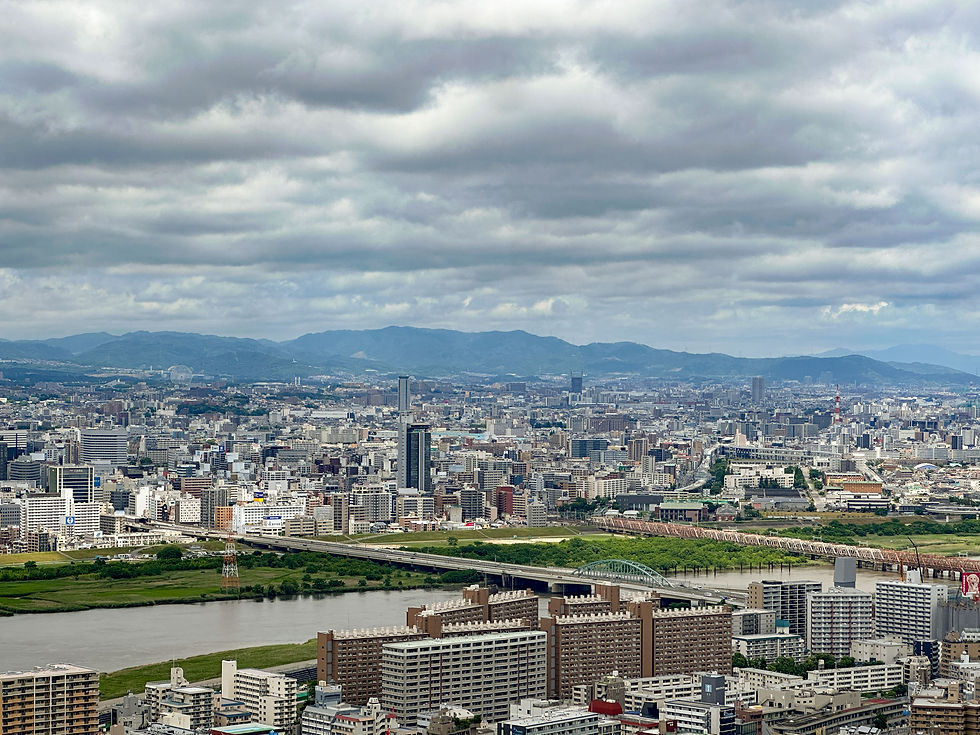
The Umeda Sky Building was the main attraction of our Umeda day. The Kuchu Teien Observatory connects the building’s two towers across its upper levels. The experience includes indoor observation space, Cafe Sky 40 and an open-air rooftop with a 360-degree view of Osaka. We paid approximately $25 for our admission and also stopped at Cafe Sky 40, where we spent about $10. Part of the appeal is the journey to the observatory. The architecture, escalators and transition between the towers made the visit more memorable than simply stepping out of an elevator. We recommend giving yourself enough time to sit with a drink, and enjoy the views from the top!
Exploring the Osaka Station and Grand Front Area
Before or after the Sky Building, leave time to explore the area around Osaka Station. This can include Grand Front Osaka, station-connected department stores, underground passages and other nearby shopping complexes. The area is large enough that it is better to wander through one or two places than to attempt to see every building. A station district may not sound like a major attraction, but Japanese railway stations often function like small cities. Shopping, dining and transportation are layered together, making them useful places to spend an unstructured afternoon. This was also a practical part of the itinerary. We could eat, shop and get out of the rain without traveling to another neighborhood.
Food and Shopping Around Umeda
Umeda is a good place to arrive hungry. Department stores and shopping complexes have restaurants at several price points, from quick meals and bakery items, to more formal dining. Food halls and basement grocery floors are useful when everyone in the group wants something different. On a rainy day, these pauses make the itinerary feel comfortable rather than compromised. We focused on the area, looked at our options, and chose according to our energy level. That strategy reduced the stress of trying to reach a reservation after navigating an unfamiliar station.
Is the Umeda Sky Building Worth It in Bad Weather?
The Umeda Sky Building can still be worthwhile in imperfect weather, but expectations matter. Heavy rain, low clouds, or fog may reduce visibility. If the city is completely covered, the admission price may be hard to justify, however, light rain, or dramatic clouds can create a different atmosphere.
The interior experience, architecture and café still have value even when the horizon is not perfectly clear. We would check live weather conditions before buying tickets. If visibility looks extremely poor and your schedule is flexible, move the observatory to another day. If this is your only opportunity, it may still be worth visiting. Just think of it as an architectural and city-view experience rather than expecting flawless sunset photos.
Day 3: Katsuō-ji Temple and a Slower Final Day
Our final day was built around Katsuō-ji, often called Osaka’s Temple of Luck. After two days of busy shopping streets, train stations, restaurants, and city views, Katsuō-ji felt completely different. The temple sits in a greener, quieter area outside central Osaka, and getting there required more effort than simply hopping between neighborhoods. That extra journey was part of what made the day memorable. We did not trying to squeeze the temple between several other attractions, and treated Katsuō-ji was the main event, giving ourselves time to enjoy it without being rushed.

Why We Chose Katsuō-ji
Katsuo-ji Temple is known as the temple of luck, or the temple of the victory Daruma. People come here from around the world to pray for good fortune, and purchase the Daruma talisman. It was the Daruma that initially drew us to visit the temple, and we did not realize how interactive the visit would be until we arrived. Daruma appear throughout the grounds in almost every size imaginable. Some sit neatly along walls and paths, while others are tucked into unexpected corners, and looking for them became part of the experience!
Another interactive detail we loved at Katsuo-ji was the postcard stamp activity. There were stamp stations placed along the walking route throughout the temple, and together they created an image on a postcard. Each station added another part of the image, so the full design only appeared after collecting every stamp. This was such a fun experience, and it made for an amazing free souvenir from the temple!
We bought two different types of Daruma during our visit. The first were small fortune Daruma. You pull the fortune from the bottom and then leave the little figure behind at the temple. Being able to place your own Daruma at the temple was amusing, and it took us a while to find the perfect spot for ours. Seeing so many of them gathered around the grounds made us feel connected to everyone who had visited before us.
Our favorite part of our visit to Katsuo-ji Temple was picking out our larger Daruma. You are supposed to pick one you feel drawn towards, write a long term and short term goal on it, fill in the left eye, and then soak the Daruma in incense. The Daruma is supposed to help you visualize your goals, and bring good fortune. We both picked one out, and the entire experience was exciting, and now they sit above us everyday as we work towards our goals!
These felt more personal than a standard souvenir because they were connected to our goals rather than simply being decorative. Choosing them, writing on them, and carefully packing them for the rest of the trip became one of our favorite memories from Osaka.

Getting to Katsuō-ji
Katsuō-ji is outside central Osaka, but the journey was much easier than we expected.
We traveled by train to Minoh-Kayano Station and then took the bus to the temple. Once we left the station, the bus was easy to find. There was already a large queue, and employees were present to organize the line and help visitors get onto the correct bus. The crowd actually made the route less intimidating. We did not have to wander around wondering whether we were standing at the right stop. During our visit, the bus accepted IC cards only and did not accept cash. We used our Suica cards.

Staff checked that passengers had enough stored value on their IC cards to get back from the temple since reception is spotty, so we recommend loading the card before traveling to Minoh-Kayano. You should have at least ¥1,600 per person available for the round trip. The return journey was just as straightforward. The bus stop back to Minoh-Kayano is directly outside the temple and was easy to identify. There was no complicated walk or hidden station entrance to find at the end of the visit.
We stopped at Sunny Side Minoh Q’s for breakfast before heading to the temple. Since we new we would be at the temple for several hours, breakfast was a must before we got on the bus. This bakery had lots of choices, was open early, and not far from the bus stop. We recommend buying food and drinks near the station before joining the bus line. Even when the ride itself is not especially long, the queue, transfer and temple visit make this more than a quick outing.
How Much Time to Spend at Katsuō-ji
If you are only interested in visiting Katsuō-ji for photos, you could see the temple in an hour. However, we recommend at least two hours at the temple if you want to fill out the postcard with stamps, take photos, and purchase Darumas or other souvenirs. The stamp activity naturally slows the route because you need to find each station and wait in line for each stamp. We enjoyed watching the picture gradually come together, and it would have been disappointing to miss one of the stamps because we were rushing.

The Daruma also reward closer attention. Some of the best displays were not necessarily the largest ones. Part of the fun was noticing small Daruma sitting on ledges, walls and other corners of the grounds. We also needed time to browse the store and decide which larger Daruma we wanted to take home. These were not souvenirs we wanted to grab quickly while running toward the bus, but ones we wanted to take time choosing, and filling out!
When planning the day, remember that the temple visit is only part of the total time.
You also need to account for:
Travel from central Osaka to Minoh-Kayano
Time spent finding or waiting for the bus
The bus ride to the temple
The queue for the return bus
The train journey back to your hotel
The transportation was simple, but the overall excursion still occupied a substantial portion of the day.
Why This Became a Slower Temple-Focused Day
Katsuō-ji became the focus of the day, rather than one stop in a packed itinerary. We could have tried to add Minoh Park, another temple, or a full evening of sightseeing afterward. Instead, we let the day unfold at a slower pace. That turned out to be the right decision for us. Between finding the stamp stations, taking photographs, pulling our fortunes, choosing Daruma, and browsing the temple shop, there was more to do than we had expected.

Our first two days in Osaka were filled with covered shopping streets, food stops, department stores and busy stations. Katsuō-ji was a welcomed contrast with trees, nature, and hundreds of Daruma.
It was still an active day, but it did not feel hectic. For us, not every day of a trip needs to end with the feeling that you successfully completed a checklist. Sometimes the day you remember most is the one where you only plan one site and take it slow.
Optional Add-Ons If You Want a Fuller Day
Travelers who move more quickly or return to central Osaka with extra energy could still add another stop.
Possible options include:
Exploring the area around Minoh-Kayano Station
Visiting Minoh Park in suitable weather
Returning to Umeda for dinner
Shopping around Osaka Station
Revisiting Dotonbori after dark
Having a relaxed dinner near the hotel
We would keep any add-on flexible rather than booking something with a strict entry time.
Even though the bus was easy to use, the size of the queue and the timing of the return trip can affect when you arrive back in Osaka. The temple is also much easier to enjoy when you are not repeatedly checking the time. For us, Katsuō-ji was enough for the day. The fortune daruma, larger take-home daruma and completed stamp postcard made the visit feel full without adding another attraction.
What We Would Add With a Fourth Day in Osaka
If we had a fourth day in Osaka, we would probably use it for a day trip rather than adding more attractions within the city. Osaka is well positioned for exploring other parts of the Kansai region. Himeji, Kobe and Wakayama were all places we considered, and each would have added something different to the trip. Unfortunately, a typhoon moved through Japan during our visit, bringing heavy rain, flooding, warnings and transportation uncertainty. That made an optional day trip feel less important than staying flexible and paying attention to local conditions. We decided not to force it. Although we were disappointed to miss these places, changing the plan was an easy decision once the weather became severe.
These are the three options we would reconsider on a future trip.
Option 1: Himeji Castle
Himeji Castle would be our first choice for a fourth day. The UNESCO World Heritage castle is more than 400 years old and is considered one of Japan’s best-preserved surviving feudal castles. Its white exterior has also earned it the nickname “White Heron Castle.” Unlike Osaka Castle, which is a modern reconstruction, Himeji retains original historic structures. Himeji is practical as a day trip because the city is connected to Osaka by both regular JR trains and the Shinkansen. After arriving at Himeji Station, the castle can be reached by walking along the broad avenue leading toward it. We would make the castle the main event rather than trying to combine Himeji with several other cities.
A comfortable day could include:
Himeji Castle
The castle grounds and defensive gates
Koko-en Garden beside the castle
Lunch in central Himeji
Dinner back in Osaka
The climb inside the castle involves narrow passages and steep wooden stairs, so this would be an active day. It is also heavily affected by weather. Much of the experience involves walking outside, and views from the castle would be less enjoyable in intense rain or wind. During the typhoon that affected our trip, Himeji Castle reportedly sustained damage to part of an exterior wall, reinforcing our decision not to attempt the journey. On a future trip with safer weather, Himeji would be at the top of our list.
Option 2: Kobe
Kobe would be the easiest option for travelers who want another city day without committing to a long journey. The train ride from Osaka Station to Kobe’s Sannomiya area can take roughly 25 minutes, making Kobe an accessible day trip from Osaka. A visit can combine the hillside neighborhoods near Kitano with Chinatown and the waterfront around Harborland.
We would plan the day around:
Kitano and its historic Western-style residences
Kobe Nunobiki Herb Gardens or the ropeway
Nankinmachi, Kobe’s Chinatown
Meriken Park and the harbor
A Kobe beef meal
Harborland after dark
Kobe provides a different atmosphere from central Osaka, while Osaka often feels dense, energetic and food-driven, Kobe offers a mixture of hillside scenery, international architecture and waterfront areas. The main difficulty would be deciding how much to include. Kobe’s official tourism itineraries separate the city into areas such as Kitano, Sannomiya, Harborland, Mount Rokko and Arima Onsen, and trying to combine all of them in one day could become rushed. Personally, we would probably choose Kitano, Chinatown and the harbor rather than adding Mount Rokko or Arima Onsen. This is the easiest fourth-day option to shorten, if the weather changed, or you become tired, you could return to Osaka easily.
Option 3: Kishi Station and the Tama Train
The most unusual option would be a trip into Wakayama Prefecture to ride the Kishigawa Line and visit Kishi Station. Kishi Station became known for Tama, the calico cat appointed as its stationmaster. The original Tama has since passed away, but her legacy remains part of the station and railway. Two new cat stationmasters currently succeed her, and you can visit them, and shop for cat themed souvenirs while waiting for your train.
The Kishigawa Line also operates specially designed trains. Depending on the operating schedule, passengers may encounter Tama-themed, strawberry-themed, toy-themed or other decorated trains. From JR Wakayama Station, the Kishigawa Line journey to Kishi Station takes about 30 minutes and passes through a quieter, more rural landscape than central Osaka. This would not be a conventional sightseeing day filled with major landmarks, but instead visiting the cutest cat themed train station in the Japan! This is definitely a niche option, but cat lovers will understand why it made our list! We were so bummed we couldn't make it here, and will definitely be visiting next time we are in Osaka!
We would consider combining it with:
Time around Wakayama Station
Wakayama Castle
A local lunch
Another stop along the Kishigawa Line
A relaxed return to Osaka
Kishi Station is farther from Osaka than Kobe, and the trip involves more transfers. That makes it better for travelers who are genuinely interested in trains, cats or unusual local attractions. It would also require checking the railway’s current timetable and stationmaster schedule. Visiting without checking could mean missing the themed train or arriving when the café or stationmaster’s office is closed.
Could You Combine Himeji and Kobe?
It is possible to visit Himeji and Kobe on the same day, but we would probably keep them separate. A combined trip might include Himeji Castle in the morning followed by dinner and an evening walk around Kobe Harborland. Both cities sit west of Osaka along the same general rail corridor, so the route makes geographical sense.
However, it would create a structured day with less room for weather problems, crowds, or a slow castle visit. Himeji Castle is substantial enough to deserve several hours, especially if you also visit Koko-en Garden. For our preferred pace, we would choose one destination and explore it slowly. Travelers who enjoy faster itineraries could combine the two, but they should begin early and treat Kobe as a shorter afternoon or evening stop rather than attempting a complete tour of both cities.
Which Fourth-Day Trip Would We Choose?
Our first choice would be Himeji Castle, because it would add a major historical site to our Osaka itinerary, and help round it out. Kobe would be the most convenient and flexible option, and work well for travelers interested in food, waterfront views and urban neighborhoods. Kishi Station would be the most niche choice, perfect for cat lovers, railway enthusiasts, or anyone looking for a unique and quieter day trip.
The right choice depends on what the first three days are missing:
Choose Himeji for history and traditional architecture.
Choose Kobe for food, city scenery and the waterfront.
Choose Kishi Station for trains, cats and a more unusual local experience.
We were disappointed that the typhoon prevented us from adding one of these trips, but we would make the same decision again. Severe weather is not the time to force an excursion simply because it appeared on the original itinerary. The missed fourth day also gave us three strong reasons to return to the Kansai region.
Osaka Itinerary Without Universal Studios Japan
Our three-day Osaka itinerary does not include Universal Studios Japan. USJ is one of Osaka’s most popular attractions, but it is not a small addition to a city itinerary. For most visitors, it requires a full day and a separate planning strategy.
Why We Skipped USJ
We skipped USJ because it was not the focus of this visit. We wanted to explore Osaka’s neighborhoods, food areas, shopping streets, and Katsuō-ji. Giving one of our three days to a theme park would have removed either our Umeda day or our temple excursion. The weather was also a consideration, we visited during the rainy season, and did not want to be stuck in lines all day in the wet, humid conditions.
Who Should Still Consider Adding It
Universal Studios Japan is still worth adding to your Osaka itinerary if you want to experience a Japanese theme park, are a huge Harry Potter or Super Mario fan, or a thrill ride lover. A priority attraction like USJ should take precedence over checking off neighborhoods that interest you less. It may also work well for families or travelers who prefer structured attractions, rather than shopping and city wandering. In that case, treat USJ as a full-day commitment rather than trying to combine it with Dotonbori, Umeda or Katsuō-ji.
How USJ Would Change This 3-Day Itinerary
To add Universal Studios Japan, we would make one of three changes. The first option is to replace Katsuō-ji with USJ. This preserves the Namba and Umeda days but removes the slower temple experience. The second option is to replace Umeda. You would keep the most recognizable Minami neighborhoods and the temple excursion but skip the Umeda Sky Building. The third, and best, option is to add a fourth day. That allows USJ to have a full day without forcing the rest of Osaka into an exhausting schedule. A three-day trip with USJ is possible. It simply becomes a different kind of Osaka itinerary.
Prefer a Pre-Planned Osaka Tour?
Our travel style tends to be fairly flexible. We like choosing one general area, saving a few places that interest us, and leaving enough room in the day to stop for food, shopping, or anything unexpected we find along the way. That approach worked especially well for us in Osaka, but we know it is not how everyone likes to travel.
For some visitors, especially on a first trip to Japan, planning transportation, deciding which neighborhoods to prioritize, and figuring out how to connect everything can feel like more work than fun. If you would rather have the details organized for you, booking a guided Osaka tour can be an easy alternative.
Tours can be especially useful if you:
Have limited time in Osaka and want to see several highlights efficiently
Prefer having a local guide handle the route and logistics
Feel overwhelmed navigating trains and large stations
Want more context about the neighborhoods, food, history, or culture
Would rather follow a set schedule than build your own itinerary
Want to meet other travelers during your visit
Depending on your interests, you can find everything from general Osaka sightseeing tours to food tours, walking tours, private guides, and evening experiences around areas such as Dotonbori and Namba.
A tour does not have to replace your entire Osaka itinerary either. You could book one for your first day to get familiar with the city, then explore independently afterward. Another option is to use a guided experience for something specific, such as an Osaka food tour, while keeping the rest of your trip flexible.
For travelers who enjoy planning every detail themselves, a tour may not be necessary. But if you want a simpler trip where someone else has already worked out the route, timing, and major stops, it can be a convenient way to experience Osaka without having to organize everything yourself.
Disclaimer: This is an affiliate link that if used, we can earn commission from at no charge to the user. These links help us continue to make honest reviews for readers.
What We Would Change About Our 3 Days in Osaka
Our itinerary worked because we adjusted it as we went. Looking back, there are still a few things we would do differently. None of them involve adding dramatically more attractions. Most involve creating even more room for weather, food and unplanned discoveries.
Add More Flex Time for Weather
We would leave at least one flexible day until the forecast became clearer. Outdoor attractions and observation decks are difficult to schedule several weeks in advance. A flexible block would make it easier to move the Umeda Sky Building or an outdoor photography walk to the clearest part of the trip. We would also save locations in groups, rainy-day options, clear-weather options and evening options, rather than assigning everything to a fixed hour.
Plan Food Options by Neighborhood
We would continue planning food by neighborhood, but instead of avoiding restaurant lists entirely, we would create short lists of places that interest us within each area. This gives us several options to choose from depending on wait times, location and what we feel like eating in the moment. For example, if we are spending time in Dotonbori, Shinsaibashi or around Osaka Station, we could save a handful of restaurants nearby and easily move on to another option if our first choice does not work out. We would still identify a few priority restaurants that we especially want to try, but most of the list would serve as flexible possibilities rather than fixed appointments.
Keep One Day Slow
The slower Katsuō-ji day gave the itinerary balance. Without it, all three days could have become a similar cycle of trains, shopping streets, crowded stations and food stops. The temple changed the atmosphere and gave us time away from central Osaka.
Have Backup Indoor Stops Ready
Our biggest planning lesson was to keep several indoor alternatives saved in advance.
The backup does not need to be another major site, it can be a department store, shopping arcade, food hall, café or grocery store. The important thing is knowing which options are near the neighborhood you already planned to visit. That prevents a rainy morning from turning into an hour of searching for ideas at the hotel. It also reduces unnecessary transit.
Instead of crossing Osaka for one indoor attraction, you can adapt within the area you are already exploring.
Our three days in Osaka were not perfect-weather days, but they still gave us a satisfying first look at the city. By slowing down, planning around neighborhoods and leaving room for food stops, we experienced Osaka without feeling as though we were constantly behind schedule. Three days will not show you everything. It is enough, however, to experience several sides of Osaka, and to leave with a strong list of reasons to come back!